Then 10 years ago I got a mac. I never went back..
But what am I saving money for right now? To build a nice PC again.
Mostly because of the exact reasons in the article.
I have a fondness for apple... but they have definitely lost their way. First, they were a computer company driven by a man who loved computers ("first" here is the Jobs return era) ... then they became a Computer company who also made a phone. Then they became a computer company who also made a phone and a tablet. Then they became a phone company who also made computers and tablets.
Now they are a phone company who presides over the death throws of an amazing operating system that is going to be killed off to make it more like a phone. The new "features" every cycle are more "lets put this phone feature on the desktop"
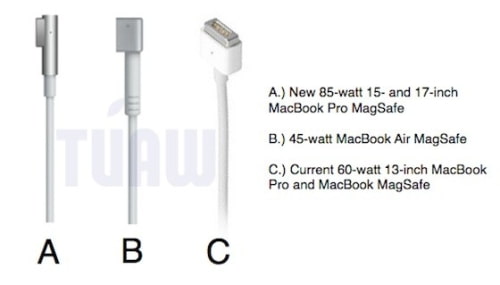
It makes me sad, as a mac fan. The hardware is getting worse. The decisions are getting dumber every time. I wont buy a laptop without a magsafe or similar connection, i have kids and animals, and the magsafe has saved a laptop more than once.. to remove something that was as core and identifiable a part of their computers was just a stupid move and served no purpose.
They don't listen to the industry or the consumers anymore, they stick their fingers in their ears and pretend to know best.
Jobs was hardheaded, but reasonable. Cook is trying to emulate the hardheadedness but fails to recognize the reasonability needed to balance that.
I too have become annoyed recently at really basic stuff not working in macOS, like I can't drag and drop a picture out of Photos app into Pixelmator to edit. In fact, dragging and dropping a picture out of Photos into any application is completely broken and doesn't work. Its as-if the Apple QA team no longer tests to make sure their applications play nice with each other in a way that has been fundamental to desktop computing since the desktop OS was invented.
At the same time, Windows 10 on my Dell laptop will heat up, spin the fan noticably and something called "Service Host: Local System" will consistently use 48 - 52% of CPU when the laptop is sitting doing nothing at all, with no applications open. I really can't understand what it's doing but have a hard time taking it seriously as an operating system.
Check the resource monitor to see which service that corresponds to: it's likely Windows Update since they changed it to mine Bitcoin or something about a decade ago when it went from being I/O to single-core CPU bound.
This is just a guess -- being very late to the conversation -- but in case someone even later is curious, this may be the well documented case of the .NET framework recompiling libraries in the background after an update.
It seems like it will never finish, but it does ... eventually. However, the lack of any UI, any indication of its presence or its progress, and also that killing it will just make it come back later are all pretty hostile.
I'm not sure what it is but it's amazingly inefficient: I notice it most when downloading VMs from https://modern.ie because as soon as I start a test VM the updater will run and then it's multiple hours + reboots before a browser in the VM is remotely usable.
No - just my boggled speculation about the kind of work which would tie up a modern CPU for hours installing a few GB of files. (SHA-256 could hash each file in a couple seconds)
A MS engineer posted a lengthy blog post on why this is the case. The ridiculous time has to do with insane system state and dependency checking for every update and each one in history before it, since Windows Update allows you to add or remove every little update ever for the OS.
The Rollup updates that MS moved towards, even in Windows 7 now, is supposed to help this. However, a completely new solution is really needed to replace this antiquated one, like many other lingering parts of Windows.
Come to think of it, that's actually an interesting monetization scheme. "You can use our software for free, but when your computer idles, we use x% of its computing power for mining cryptocurrency" (or whatever profitable endeavor). It's of course disastrous from an environmental perspective, but still interesting.
Svchost.exe is a bonkers bit of design that goes against the simple, basic separation of concerns that OS-level processes provide by running multiple "services" as DLLs loaded into one process. This makes it extremely hard to pinpoint which service is faulty.
That helps a little, but fundamentally the runtime of a module is still "billed" to the svchost.exe process as a whole - so if a particular one is at 100% of a cpu, you can't tell which module is causing the problem.
Seriously as I am typing this right now, on Mac OSX, the "kernel_task" is using 50% CPU for no apparent reason and fans have been running for > 20 minutes
I used and loved iPhoto and then I had a great (first impression) of Photos until I tried to do the thing you describe: DRAG AND DROP. Apple forums provided an answer (I would call it a work-around) with their usual condescending tone: hold Alt while dragging, and you can at least get a copy of the photo/video of interest into a folder in the Finder.
I just tried it in Photos 2.0 (macOS Sierra 10.12.3) and it works as expected - drag'n'drop from Photos to Finder copies files into selected Finder folder.
I recently discovered the detailed and amazingly accessible Aqua Human Interface
Guidelines from their golden years have been completely gutted and replaced with the macOS guidelines that cover only the basics. They've abandoned years of accumulated wisdom. Luckily the old versions still float around in PDF form, the first few chapters are just good timeless UI design advice.
Photos overall is a trainwreck. Options are hidden and hard to find, anything beyond "tag this image with your auntie's name" is way harder than it should be... and this without ever mentioning the dreadful "I'll quit when I want to, not when you tell me to" backend process.
Yoink seems to trigger a file export in Photos. Why that doesn't happen with other programs is anyone's guess.
I put "workaround" in quotation marks because this is really how I do all dragging and dropping between programs in macOS, since I tend to run stuff in full screen.
Is it even possible to chose a photo out of your photo librry from a browser's file upload dialog? I don't think it is, when the photos are in iPhoto. How many steps does it take to get a picture off your camera, into iPhoto, then exported, and finally uploaded to Craigslist?
Photos should show up as an icon in the side-bar? Rather than navigating to the actual files I think you're meant to access them this way. It's a good idea and used to work better in my memory - these days it can be a bit finnicky to find the photo you want.
After some experimentation, it turns out my problem was that I expected - ridiculous, I know - that it would copy image data in some form that's comprehensible to Gimp, Firefox and Thunderbird. So I now rather suspect that Photos is using some new API, that Gimp/Firefox/Thunderbird aren't, and that this new API is, for no particular reason that I can see, not remotely backwards-compatible.
Feels like this forms a data point for the thread - since meanwhile, on Windows, I have a couple of programs in my bin folder that I use fairly regularly that I compiled in 2006.
I know this isn't the point of the comment, but Yoink works perfectly as an intermediary for this. I use it dozens of times a day for various things but this one in particular is a lifesaver.
But isn't it sad if MacOS has to be compared to Windows to relativize its flaws?
People were using it because they felt it was BETTER than Windows, not because "both are meeh".
Also arguably, selecting text in a dialog box (instead of copying the whole text) is a lot less used feature than drag&drop of photos.
It's not a big deal, but it's a death by a thousand cuts. These little things that used to be part of the refined experience of OSX are turning the "just works" part of their slogan into "damnit, why can't I"
That's called a work around. Its not a big deal in the grand scheme of things, but its not something you'd call a desirable design trait for a desktop app.
And then deleting or moving the photo from the desktop afterwards. So, three steps as opposed to one. For a feature (drag n drop) that's all about convenience.
Buy a breakable USB cable? I've had MacBooks for 10 years, and I'm ecstatic to see MagSafe gone. Apple chargers have always been shit, and Apple laptops have never been compatible with off the shelf battery packs. Moving to USB-C and detachable, replaceable cables, is a huge step forward.
Also, what PC alternative has a MagSafe equivalent?
I can now charge my Macbook with the same cable I use to charge my phone. I can now charge my laptop from both sides. I can trickle charge my laptop in my car now. It's making my cable life so much simpler. Yes, I have other devices that have yet to catch up to the C spec, but with the leading laptop manufacturer pushing so hard for the C port; I don't think it'll be that long.
Good point, and it's because of the status quo bias. When an alternative is proposed, people look at what they lose, and since we don't like loss, we say, "No, I don't want that".
Thought experiment: say Macs had USB-C for 10 years, and the latest Macbooks switched to MagSafe. There'd be a lot of complaints about Apple locking us in to their walled garden, and how we have to buy a proprietary overpriced charger now, which can't charge other devices, moreover.
One technique I try to follow is an anti-knee-jerk reaction: if everyone has a knee-jerk reaction about something, I remind myself of the advantages of the alternative.
Ultimately, the only true test is time. Wait 2 years and let the emotions cool, and you'll know if the outcry was justified.
> Thought experiment: say Macs had USB-C for 10 years, and the latest Macbooks switched to MagSafe.
Then you would presumably still be able to use the remaining USB-C ports to charge it, with the MagSafe merely an option. That would not get many complaints. If they violated that they would deserve the complaints.
The question isn't whether they deserve the complaints, or about the minutae of charging, but whether people think that going from X -> Y is bad and going from Y -> X is also bad. If so, they're just being change-averse: ignore them.
But you were using it to make an argument that the complaints were invalid.
So I'm going to reply to that specific argument, by pointing out that when Apple changes the IO ports to USB-C and enables USB charging, it does not require them to remove the magsafe port.
In other words, apple went X -> Y. But adding Y reused IO ports and could have coexisted with X. Even though Y might be better than X, it was a false dichotomy in the first place.
There's no need for MagSafe if you have USB charging. It's redundant.
It also entrenches the old standard rather than making way for the new one. If you have a laptop with both USB-C and MagSafe, and you need a second charger, you might buy a MagSafe charger if it's cheaper or to use with an older Macbook. Whereas without MagSafe, you'll buy a USB-C charger — the new technology.
If you want to do a transition, you have to go all in. Having both the old and the new port merely delays the transition, causing more pain in the long-term. Get it over with.
That would be a valid argument except that it implied one port less since you have to use one of the already scarce ports to charge. People like me were waiting for an extra port and got one less
Try to keep MagSafe 2 connected in any circumstances other than flat and stable. Sitting on the couch or laying in bed no way, it constantly disconnects.
Apple owns the patent on magsafe. That was the one feature I actually liked on my MacBook pro. I have seen to many chargers wear out, or wear out their ports. Magsafe also made it easier to connect the charger.
Think how nice it would be to have the same functionality with USB ports....
Currently at work we use (mostly T 4xx/5xx series) Lenovo laptops with rectangular power connectors [1]. I have mine for ~2 years, was used ~year prior. I connect/disconnect charger multiple times a day and both ports are sturdy as new. Others state similar feelings.
FWIW, some appliance connectors have used magnets for well over a decade in Japan and elsewhere in Asia (it usually looks like https://www.liandung.com.tw/Japan-m/LT-515.html). I owned an electric kettle with one of those.
I don't understand how Apple could patent this and prevent anyone else from implementing it. In any event, there do seem to be 3rd party implementations for USB-C if you're keen on the feature: https://www.macrumors.com/2016/01/04/griffin-breaksafe-magne....
Apple patented MagSafe and how it works, specifically. This doesn't preclude other magnetic breakaway cables if they don't work exactly the same way as MagSafe.
Can you recommend magsafe-like USB cable that works with 2016 MBPs? When I looked for something like this I found only a cable made for the 12" macbook that could not charge my machine.
I was worried about the loss of MagSafe too. Now, with almost three months with the new MacBook Pro, I have become very happy with USB-C, and I hope that iPhones and iPads will make the switch too. A USB-C-only world would make so many things easier!
If they actually enforced their cords so they didn't fray and fall apart within 6 months, I would be happy. Their stubbornness to correct the cord situation is exasperating.
Apple is a still computer company, because Phones ARE computers.
For the majority of the population in developed countries, and almost all of the population of developing countries, smartphones are the only computer people have or need.
I agree that Apple have shifted focus away from "making tools for people to create things and solve problems" towards consumption-oriented mobile devices. But those devices are still computers, and they're wildly successful.
If Apple devoted their focus to products in proportion to their revenue, then they would be putting 12x as much effort into the iPhone than they would for the entire Mac lineup.
Sure, phones are computers. Also, most people use phones as their primary way of connecting to the Internet.
But what does that have to do with me (or, it seems, the GP poster)?
I want a great computer on which I can do what I usually do on my computer which is mostly programming, but I guess I could be fancy and say "content creation" instead.
The fact that phones are computers have exactly zero relevance when it comes to me choosing a new laptop.
I used to be a hardcore Mac user, because the computing environment was superior to any other choice, but that's not the case anymore so my next computer will be a Linux laptop.
> If Apple devoted their focus to products in proportion to their revenue, then they would be putting 12x as much effort into the iPhone than they would for the entire Mac lineup.
True. However, creators and developers (who, in my experience, almost always use a desktop) are important for the iOS platform. Someone has to write those native apps. Therefore it doesn't make sense to ignore them for too long.
Developers flock to the platform with more users. Which means Apple actually does need to focus on iOS to get more people to keep using mac.
Those of us who are ios developers will keep bitching about it but have no alternative so will keep on using macs as long as their iOS ecosystem is doing great.
While this is generally true, it's a little more nuanced. For example: Android has a larger market share (by a lot globally), but apps are frequently developed for iOS first. Why? Because it's easier. Device fragmentation plays a large role in that, but part of the cost of the project is dealing with the development ecosystem (good or bad). As Apple makes the development less appealing (because of sub standard hardware / OSX) android will seem like a better option.
Developers don't develop for iOS first because it is easier. They develop there first because iOS users pay money for things/apps. Android users do not.
I'm an Android user and I pay for things (?) and apps. Are you saying that I'm the only Android user who pays for apps and "things"? Or is your statement just a gratuitous cliche?
Is the average revenue per user a relevant number though? When it comes to choosing what platform to develop for, wouldn't total revenue be a more important number?
It's well understood by many startups and established companies that developing for iOS often takes priority because there's a larger group of users willing to pay more money than their android counterparts
My point is not whether Android or iOS is better. It's that the key to keeping iOS developers around is NOT to make a better laptop but by putting more effort into iOS so that its market share grows.
No matter how great XCode becomes, if everyone starts using Android, people will all jump ship to Android, which means many iOS developers will change to windows.
Sadly that's more a race to the bottom since Google still don't seem particularly interested in actually making the experience for Android developers any better.
I live in developing countries. It's true that smartphones are the only computer people have or need, which is a problem.
Mobile devices are still consumption devices. It's hard to create complex, multi-layer structures on phones: the screen is too small, the processor is too underpowered... take your pick. But creating a good SaaS or a good UX on a phone is darn tough.
Here comes speculation:
Websites/services in developing countries are painfully bad.
This is due to a number of factors outside technology, but it's also true that universities here graduate people who never grew up with big screens and unwalled gardens, never grew up creating rather than consuming, and don't have a sense of what it's like to go from blank screen to working prototype to polished platform.
Neither do most people in developed countries.
But at least computers are widely available in developed countries so that the x% of kids who have an affinity for these things end up getting started early.
Someday mobile devices will match and surpass desktops and laptops. But that day is not today, and meanwhile developing countries are years behind not only in physical infrastructure, but in online infrastructure as well.
You're correct that phones are computers, however:
Solidworks, AutoCAD, etc. don't run on phones
Photoshop/Lightroom/Illustrator don't run on phones
SPICE, VHDL, Verilog don't run on phones
InDesign and other DTP programs don't run on phones
Emacs/Vi don't run on phones
There are a host of actually-useful programs that are completely unsuitable for run on phone-computers, that do run well on laptop-computers and desktop-computers.
"AutoCAD" is a brand that applies to a large number of different CAD-related programs, some of which are mobile apps.
> Photoshop/Lightroom/Illustrator don't run on phones
Both Adobe Photoshop and Adobe Photoshop Lightroom are in the Google Play Store for Android phones.
> SPICE, VHDL, Verilog don't run on phones
Well, I can find circuit design apps that support a subset of verilog, but this is basically right.
> Emacs/Vi don't run on phones
There are ports of both on the Android App Store, supporting phones.
> There are a host of actually-useful programs that are completely unsuitable for run on phone-computers, that do run well on laptop-computers and desktop-computers.
There may be applications that phones don't have the processing capacity for or that work best with certain I/O peripherals that phones aren't often used with, sure. But the array of classes apps that are completely unavailable for phones is smaller than you seem to think.
> For the majority of the population in developed countries, and almost all of the population of developing countries, smartphones are the only computer people have or need.
Not true. I am from India. Developing country. There are 5 working people in my family. None of us can replace our notebooks with our phones. For all of us phone is for communication and notebook for work.
Yes, this, thank you. The "but it's a computer!" sophistry falls apart the moment you take one look at the user interface. The reason people are starting to get annoyed with Apple is their continued phone-ification of the desktop.
Thanks, that is a nice write up. I especially like "Imagine a world where the way desktops are meant to function is by plugging your ultraportable into any available set of peripherals: monitor, keyboard and mouse. The interchangeablity and convenience of that, necessarily implies that the brand and type of monitor / keyboard / mouse you plug your ultraportable into doesn’t matter, as long as they’re technically compatible." I have written on the same topic, and that is the future I see. Microsoft had the right idea with Continuam, and I expect Apple, Microsoft, and Google to all try to make this work on the mobile side while leaving it to 3rd party manufacturers to develop USB-C compatible monitors that act as a hub for keyboard, mouse, USB drives, etc.
> Imagine a world where the way desktops are meant to function is by plugging your ultraportable into any available set of peripherals: monitor, keyboard and mouse.
I'm skeptical that this will work for everyone.
Everything is tradeoffs. When "must be tiny" is the top priority, performance and battery life necessarily suffer.
There will always be people - from gamers to video producers - whose top priority is performance. And for computer geeks generally, the weight difference between a laptop and a phone is not compelling, but having four times as many cores would be.
The portability difference between a mainframe and a laptop is immense - it changes your working life. The portability difference between a laptop and a phone is much smaller. It means you can do things spontaneously, because you can always have the phone with you. But if you're planning to work, the difference is minimal. Especially if the smaller form factor means you have to plan to have peripherals wherever you're going.
Eg, I can take my laptop to a cafe or a park and work. I couldn't do that with an "ultraportable" unless I bring my own peripherals. So it's actually less portable for the situations I care about.
Saying phones ARE computers is being completely pedantic.
Of course they are. So are microwaves at this point. So are toilets at this point.
I fail to believe that you just "missed" the real point, that the form factor and the user interface are (and need to be) quite different from a phone to a desktop.
> If Apple devoted their focus to products in proportion to their revenue, then they would be putting 12x as much effort into the iPhone than they would for the entire Mac lineup.
Consider:
- iPhones will suck if developers stop making software for them.
- You need XCode to make software for iPhones
- XCode only runs on MacOS
If developers start abandoning Mac en masse, that's going to hurt iOS a lot.
Also, if photographers, videographers, animators, designers, audio engineers, etc start championing Windows or Linux as their platform of choice, the average person will follow eventually. "All the pros I know use X" persuades a lot of average people.
And if people aren't using Mac, there's a lot less reason to use iPhone as opposed to Android.
I hate to use the word "synergy", but that seems to be what they're risking here.
No, Phones are TVs, books, consoles etc. A typical computer usage at a guess is an Excel file. I would wager that majority of business usage is some kind of document editing stuff and Phone by design will never ever be able to do this.
I switched to Mac at about the same time as you. I can't see myself ever going back to Windows but if Adobe ever ports their application suite to Linux, I'd switch immediately.
I can't agree here. Windows 8 was not usable as a web developer, for me. Windows 10 is something I don't mind using as my experimental box (I still use OSX for day-job tasks).
Windows 8 was worse than Windows 10 which is worse than 7. I should have specified-to me Windows 8 and 10 are both poor, both much worse than 7. To be honest, I had an EASIER time with Windows 8 (company provided laptop) than Windows 10.
Windows 7 was the pinnacle windows experience for me and it has gotten worse ever since.
What about windows 7 was so great? The start menu? Windows 10 has a 5 second boot up time, most all annoyances anyone has online can be configured away, and it is insanely stable (haven't had it once crash on me yet).
It took a familiar UI and improved it. It added features in an intuitive way. And many of the features of windows 10 could've easily been added to 7.
> Windows 10 has a 5 second boot up time
Man, I wish. My 10 system never boots up that fast. Meanwhile my Windows 7 desktop takes 15 seconds to boot up on SSD. Those 10 seconds just aren't that much of a feature for me-especially since my laptop/desktop are typically in sleep mode anyway.
> most all annoyances anyone has online can be configured away,
Yes, because we should have to do work to eliminate baked in ads and processes that share my information with who knows who.
Also, you can't even intuitively FIND settings. The Control Panel has some settings the Settings app doesn't have and vice versa. It's a mess. Why can't they all be in one place? Mac? one place.
I can't even get Windows 10 to update. Instead I have to constantly kill a rogue update process that decimates resources because I can't get a basic update to download and install properly.
This is one of those annoyances, probably not a crash but one of those infamous 3am forced reboots while you're playing CSGO no less. This is one of those things you need to google and configure away.
I am far more productive now than I was on OSX. Switched over when the Windows Subsystem for Linux came out (you can see my ZSH shell running in the corner there)
This is interesting to me, because the main reason I'm a mac zealot (for all but le screengames) is because it's mostly indistinguishable from working on a linux box, without any of the negative aspects of running linux on a workstation. Any time I try to do work on my Windows machine it feels very handicapped. WSL helps, but it's still one more layer of abstraction.
SSH keys/git always feel like a hassle on Windows, rsync was slow as fuck for me on WSL (but works fine in Cygwin), any kind of scripted behavior is a hassle. Package management outside of WSL is pretty annoying, choco is okay, but nothing compared to brew/apt.
At best I could see myself being equally productive on Windows, but not without significant effort.
I'm on a beast of a machine that I could only dream of when I was stuck inside the Apple ecosystem.
Granted there were a few of annoyances I had to find workarounds for, but nothing unsurmountable, we are devs after all. There was a lot I had to relearn the-windows-way, old habits I had to drop, new ones I had to adopt. But with experience comes expertise, and you get used to the new way. I now have that handicapped feeling when I use OSX, death by a thousand restrictions. Funny thing, I never noticed them before, I assumed that's just how things were.
You don't know how far you can push and customize an OS until you make it your main environment and force yourself to stick to it until you overcome and find your new workflow. Pussyfooting around with Windows while you use OSX on your main machine is not how you test the OS for fitness, nor how you change old habits. You have to go in it with an open mind, you're not going to find OSX in Windows, you WILL have to relearn new ways of doing things, then you have to dive into the deep end of the pool head-first and attempt to hit your stride.
I understand your point about having to give an honest shot at Windows - I bought a Win10 license some months ago. It's fine.
Until I wanted Emacs.
Until I wanted to uninstall software.
Until I wanted to setup a VM in VirtualBox (set up a Win2k12 Server VM tonight, and it simply failed to boot 3 consecutive times, then booted up in a "repair" mode, and then failed to boot again, just to boot up again after the 5-6th try. Wonderful).
Until I wanted a damned clock that keeps time (always have to manually stop/start automatic time in the options).
I really want to like Windows but I can't. It feels like it's going out of its way to annoy me. Booting up a fresh Debian install feels so much better... I just feel like I have to understand how things work much more. Linux is a sharp tool, and Windows feels like a clunky bicycle.
The only actual _windows_ problem of those you listed is that uninstalling software is a hassle. That said, it isn't a walk in the park on Mac either.
Can't use Emacs on Windows? Use any other editor.
Can't setup VM in VirtualBox? A VirtualBox (maybe) problem
If you go on Windows expecting the same environment as OSX or whatever OS you're on, you're going to have a bad time. Booting up a fresh Debian install feels better because you know what to do already.
Booting up a fresh Debian install for anyone else is likely to be an almost impossible undertaking without reading some kind of guide, if you're wanting to setup a proper dev environment.
There are problems in any platform you chose, you're probably just subconsciously sidestepping those in your process of setting up, while the Windows ones stick out to you.
Example problems I notice on Mac that are fine on Windows;
Docker is extremely slow, I need to run it inside a Linux VM for any kind of proper developing
Window management is horrible
Installing software
Now, I'm no advocate for any OS, I love running Arch Linux with i3wm, I love OSX and I love Windows. I don't see any reason at all to hate any OS, I can setup my dev environment on practically any platform I could want with little or no difference. The only things that change are the things around my environment, the simplicity of i3wm, the task bar on OSX etc.
In my opinion Linux is the outlier here, which provides the greatest change in environment, not a bad one mind you, just a difference. Mac and Windows are mostly interchangable, I can switch betweem them with little overhead.
Alright, I was feeling quite whiny yesterday. My opinion of Windows is not that bad - I bought a license, which is enough said :)
I don't prefer OS X over OpenBSD or Debian. What I like is that I can mostly just hop from one to the other without doing a context-switch. Things (mostly) work as I expect them to from one box to the other. That's not true for me on Windows (but that is to be expected).
I learned about computers on Windows, from 95 to Vista (briefly touched it and then left for Unix). I used to memorize countless contextual menus and options and paths between each, so that I would see how to solve a problem when it arose and could diagnose it without access to a computer. I still do not have the same ease with Unix.
What I have gained by using Unix is real knowledge about how computers actually work, not only how the OS itself is built. And in my anecdotal experience, typical users of Windows (at work, college and friends) unequivocally understand and know less about computers than typical users of Linux do. That is true of Mac users in general but the effect is less pronounced than with Windows - most Mac users that I know have a basic understanding of the command line.
But take this for what it is: personal experience.
> Can't use Emacs on Windows? Use any other editor.
But... to Emacs users, there is no "any other" editor :)
// That being said, it's possible to run a native Windows build of Emacs, I remember doing that at some point. It wasn't overly nice though, and you have to delve into the whole msys/mingw/cygwin thing.
It's like they don't even try. After a lifetime of looking down at Windows users, most Mac users go into Windows looking for reasons to validate the way they already feel towards it (irrational hatred) and don't allow themselves to like anything about it. They hit a couple of bumps in the road and quit in frustration and use those as excuses for their decision to retreat back into their comfort zone.
Don't be that guy.
I am proud to say that I can fully configure a dev environment and work on any major OS out there. Linux (Debian and Redhat based), OSX, and Windows.
Currently, I'm glad I'm no longer bound to OSX (deprecated OS, overpriced hardware) or limited to Linux (no gaming and no adobe suite). I'm on a constantly evolving OS ran by a forward thinking company on hardware upgradable through the next decade. It can only get better from here. I got no worries.
My point was that not having Emacs in Windows is a non problem because the editor market is oversaturated. It's not like the Adobe suite where any other product is almost a downgrade, so running a system that can't run Adobe products would be a liability.
Not being able to run Emacs as a reason not to use Windows is like saying; Damn! PulseAudio doesn't work on Windows, guess I'm back to Ubuntu.
I am not the biggest fan of emacs but for what it is it is more on par with people saying "I dont move to Linux because it does not run Adobe products".
There is no alternative for emacs if gimp does not count as alternative for photoshop.
I run Emacs on Windows just fine. Cygwin Emacs + Cygwin Xserver works pretty well. Ubuntu on Bash on Windows is better by some measures though. You might like that one.
I spend long hours staring at the screen, I need a dark theme for eyesight preserving reasons. I had a dark theme on OSX until Apple decided to give a massive middle finger to the theming scene when they released El Capitain. The built-in dark mode just doesn't cut it. Yet another reason I'm glad im on Windows now.
Yes, exactly agree on Adobe opening their SaaS cloud to be used on Linux machines. I don't understand their hesitations but I also don't see it happening any time soon.
>> The new "features" every cycle are more "lets put this phone feature on the desktop"
What is it missing? It's been a while since I really wanted a feature in the desktop OS. All of the 'phone' features (besides launchpad) have made my life a lot easier (continuity, handoff, notification centre, even Siri from time to time).
As a app developer who wanted to build an app which challenged what a mac can do with regards to productivity I had to basically leave the mac app store because they made it impossible for me to make it work in Sandbox mode.
Shipping Unix tools (like Bash) from this decade would be a start.
Trying to get modern Unix software to run on OSX is getting more and more painful. Since development is the main activity I do on a laptop, this is quite important.
It was the main reason a lot of people (myself included) moved to OSX from Linux. I honestly believe that its Unix compatibility was one of the main reasons Macs got popular with developers in the first place.
That's not what I said. I never meant to give the impression that “developers” necessarily means Unix users. A lot of them are though, definitely enough to be a noticeable fraction. The number of people in this very thread proclaiming the greatness of the Linux subsystem in Windows 10 should confirm this.
You have to admit that around 2003 or so there was a huge influx of technical users to the Mac. My proposition is that a lot of those users were developers moving from Linux (or from an unhappy Windows life, wishing they were using a Unix-based operating system).
I base this on the general sentiment at the time, and I was one of the people who made the switch. I'm sure you can find old posts from me on Slashdot talking about how great the switch was.
Now I'm on Hacker News, talking about doing the exact opposite. I'm moving away from OSX because the Unix experience has become really bad.
I agree, but on these discussions, that subset of developers just gets packaged into developers as whole, as if there wasn't anything else.
Personally I know UNIX since Xenix days, do have a vast experience across UNIX variants, use it in some form in many projects, but rather use OS X and Windows environment.
For strange as it may seem, some of us are actually happier with the GUI developer tooling culture of OS X, Windows, Android, iOS.
My experience with hardware that comes pre-loaded with Windows is that it is utter crap. Or so it seems - it works fine once you remove Windows and install Linux for example. I have kept none of my previous Windows machines. None. They all decay so fast, BSODs after months of use, constant reboots just because things don't act right, general instability, sluggishness, etc. I have only recently built myself a new Linux tower. Much more pleasant.
OTOH, ALL Apple hardware that I have bought (multiple iPads, iPhones, iPods, Macbook Pros, iMacs) still works as advertised and is in good shape (I always buy and use Apple Care). I have just recently begun to use my Linux desktop more because my 2009 MBP is starting to feel a bit sluggish.
People can whine all they want about Apple (I personally will not buy the new MBPs, wait until next year's model). The truth is they've set the bar so high that anything less than perfection (which IMO is mostly what they gave us during the last decade) is seen as unacceptable. The same cannot be said of Windows - at least according to my experience since Windows 95. I recently bought a brand new SSD and a license for Windows 10. One day after installation, Windows crashed and had to "repair" itself. To be fair, it has been running flawlessly since.
Do you just roll into WalMart and buy the first $300 HP you see?
That's literally the only way I can see your anecdotal experience being truthful.
The PC marketplace is open, like the Android one. There's a lot of cruft to sift through, but it should only take about 1-2 hours of research to find the best laptop at any given time and any given price range for any given use-case.
No. ~1200 PCs and laptops. I understand that it seems like I'm exaggerating. I'm not. Either I have been incredibly unlucky (or stupid in my choices), or Mac hardware is of better quality.
>First, they were a computer company driven by a man who loved computers ("first" here is the Jobs return era) ... then they became a Computer company who also made a phone. Then they became a computer company who also made a phone and a tablet. Then they became a phone company who also made computers and tablets.
>Now they are a phone company who presides over the death throws of an amazing operating system that is going to be killed off to make it more like a phone. The new "features" every cycle are more "lets put this phone feature on the desktop"
I don't know much about this area, other than the little I have read, but didn't MS do somewhat the same thing - "lets put this phone feature on the desktop" - with Windows 8? Not sure if they reversed that in Windows 10. Interested to know.
Windows 8 was ridiculous, and one of the things that gave MS a big wake up call. Its now a different company. Windows 10 is leaps better in about every way than 8 (not without its own issues, of course). Disclosure: I am a MS MVP. MS will listen to me in almost every area I care about.
Interesting. Yes, though I've never used Win 8 (and don't want to), from the little I had read, it seemed like the idea of trying to merge the mobile and desktop paradigms was a bad idea from the start, and doomed to fail.
Windows 8 didn't merge the mobile and desktop paradigms, it put the mobile paradigm over the top of the desktop.
The apps stuff (Windows Runtime) was actually quite well done for a first try, but it was unfamiliar to Win32 users and got in the way. (Only one click away, but people are impatient and resist change.)
Windows 10 does an excellent job of merging apps and traditional programs, though it's not strictly correct to equate apps and mobile. Windows 10 is a mobile operating system that runs apps from an app store, but you can resize apps and run them seamlessly alongside traditional Win32 programs.
You can still run Windows 10 in tablet (Windows 8/8.1) mode if you want to. I don't know anyone who does.
> Cook is trying to emulate the hardheadedness but fails to recognize the reasonability needed to balance that.
I don't think Cook is hardheaded. I think he has no idea how to run a product company. Pretty much everyone from the average HN user to Larry Ellison predicted this outcome. Cook is logistics / supply chain etc, Ballmer was sales, neither had any business at the top of their respective companies. Jobs did it on purpose, in my opinion, because he believed the single most important function initially was to keep Apple running smoothly and to complete the iPhone boom (ie the big product for the next decade was already in place). The only question is how long Apple will stay in the Cook era before getting a product leader replacement.
FWIW, I have a 2016 13" nTB and have had a few trip over the power cord incidents. The USB-C cord snaps right out almost like magsafe for me... the laptop will get a nice tug and move an inch, but it comes out even on a slick countertop.
The original magsafe design ( http://www.iclarified.com/images/news/9014/31392/31392-500.j... ) was the most ideal desing out of all of them in my opinion... I have seen macbooks slide about 20-30cm with the new designs without the magsafe connector disengaging, all because the of direction of pull.
The only problem was that the original magsafe design was prone to fraying. and probably didn't look as sexy as having the cord at a right angle to the computer.
I own one of these. It comes close, but it's just not the same.
I use my laptop, closed, hooked up to an external monitor. Nowadays, I spend a lot of time on video conferences. The number of times that my laptop has shut down mid-conference because I tapped the cable under my desk just enough for the connection to drop for a split second (combined with Apple's -- let's call it "interesting" -- decisions around power management) in the last week is way too high.
I categorically refuse to pay more money to buy something to add on to an already overpriced laptop that sticks out from my computer's form factor and that should be built in.
Fortunately for me I got a new laptop not long before this new abomination came out. If Apple doesn't correct this gigantic mistake, the next time I get a new laptop it won't be made by Apple.
Man you would absolutely hate to work any job that requires a serial connection then. Because let me tell you about the serial-to-USB adapters I've used... I wish I had the luxury of saying that I categorically refuse to pay more for something that sticks out of my computer that I think should be built in.
If those are permanently-emplaced USB to serial adapters and you have problems with reliability, I recommend checking out Digi.com for their "Serial Servers." We have a couple of customers who've been running faxes from VMs to external modems over Digi One SP units for more years than I care to think about, and they're quite simply rock solid.
I do embedded dev; at any time I have 2-6 serial-USB adapters hooked up to my MBP. They are all plugged into an external 10 port USB hub though, would be a little harder to do it otherwise.
Anyway, back to your point, I most certainly do NOT want DB-9 or DB-25 ports on my laptop. ;)
The operative clause there is "should be built in". And of course I can say "should be" because it has been for years now. Literally just yesterday magsafe saved my computer from being thrown off the desk. The regressions in overall user experience with this latest MBP mean that I'm no longer willing to pay Apple the premium that I've been paying them.
No, the operative clause is "I think". You're talking about your opinion, while simultaneously telling me that my opinion is worth less than yours just because it's different.
It'd also be great if I could have a VGA output, but that ship has long since sailed, hasn't it? It'd also be great if I could have more than two USB ports, but I have a 2015 MacBook Pro. To get four USB ports I'd have to upgrade to the 2016 MacBook Pro. See? To me, the 2016 is better than that one I have. It lets me plug in more adapters, adapters that I've been used to carrying for years. I carry four with me to every client site I visit, and you don't see me whining about it on the Internet.
Regressions in user experience? It's double the number of ports! It's a god damn lifesaver!
The number of people who trip over power cords is almost definitely much larger than the number of people who need VGA output, or need four USB ports (given the easy availability of USB hubs).
I say the OS is getting worse, the quality of the software is nowhere near what it is used to be. It's clear that they need to put more effort and polish Mac OS.
Apple laptops are still successful as for now, they sold wagons of the latest Macbook Pro, but it is not going to last if they don't fix the OS ASAP.
> First, they were a computer company driven by a man who loved computers ("first" here is the Jobs return era) ... then they became a Computer company who also made a phone.
You missed the most important stages in between: when they became a company that made cute, candy-colored computers that would match your Volkswagen New Beetle, then when they made a totally awesome mp3 player you could get to match it.
Good riddance to magsafe. I've had two laptops become unusable because the magsafe connection became flaky and wouldn't charge unless I fiddled with it until it rested just so (even contact cleaner wouldn't help). There was no hope of it lasting more than a few hours without constant tending by me to get the connection just right again. I've never in my life had any other computer that failed in that way.
Moving to USB-C was the right choice. Charge cable goes bad? Buy another one for $15.
Everything else is spot on. Apple quality is fast going downhill.
Many years ago, before the age of the iPhone, I had a meeting with about thirty people at Apple headquarters at the request of Steve Jobs. That was my very first visit to Apple HQ.
After half a day of conversations, as we left the building, my very first words to my team were: "Apple Computer is no more. This is a marketing company. They might as well stick their logo on washing machines, microwaves and refrigerators. They know how to market them to be cool and they'll sell millions of them"
Then came the iPhone.
And, yeah, they could have filled homes with Apple appliances. Not sure why they didn't go there. So easy. Not saying it would have been right, but they had the opening and the mindless following to make every home "Apple Cool".
> I wont buy a laptop without a magsafe or similar connection
Not a big deal nowadays, my mid-2014 Thinkpad has a similar connection (it won't ever drag the laptop when pulled), I'd think most laptops should have such connectors by now, "mag-safe" or other?
which adapter exactly are you referring to here? I have a 2015/2016 thinkpad yoga for work and I don't think it's the same/similar at all to the magsafe adapter. Magsafe comes off even with the gentlest, but firm, tug even at an angle. I can't say the same for my thinkpad
> the consumers anymore, they stick their fingers in their ears and pretend to know best.
They are though. Consumers will pay for hardware with batteries that die after a year and a half. They'll pay for vendor-lock in and to be locked into the walled garden experience. They'll pay for hardware that will be locked out of the walled garden and unsupported by vendor updates after 4-5 years. They'll pay extra for accessories that give basic functionality to their electronics. They'll pay a massive premium for accessories that are subpar for their asking price if they're endorsed by celebrities.
I'm not a fan of newer Apple hardware and software, but we're in the minority.
Agree. Have you noticed that their phones also suck now? I am locked in their eco system, but I can tell, the quality of software is just not there any more.
> Jobs was hardheaded, but reasonable. Cook is trying to emulate the hardheadedness but fails to recognize the reasonability needed to balance that.
I think we can be sure that under Jobs, they would not be in a situation where you cannot charge the current iPhone model with the current MacBook without a dongle. "Oh, it's not a dongle, it's just a cable." -> Get out of my face.
I'm in the same boat. I switched around 2008-2009 to jump on the iOS app wave, but am more interested in Windows since 10 and Azure.
I still think their rMBP 15s are the all around the best you can buy. I haven't tried the track bar version yet though. Also, OS X (or whatever) on a rMBP is still great for surfing the web. The zoom with the trackpad is flawless.
You can try it on any Mac with https://github.com/bikkelbroeders/TouchBarDemoApp however the touch bar does not seem all that useful to me and I think that the previous model, (2015), is all around a better buy, higher performance CPUs, standard USB 3-A, MagSafe...
> Now they are a phone company who presides over the death throws of an amazing operating system that is going to be killed off to make it more like a phone. The new "features" every cycle are more "lets put this phone feature on the desktop"
Wireless charging is horribly inefficient...IIRC there aren't even any that go over 10W.
Magsafe may be deprecated by Apple, but that's a step backwards in functionality. One cannot deny that using USB C for charging is inferior in terms of protecting the device.
Given it's intended to be a permanent fixture in the side of your laptop, at the size of a (keyboard) key I'd say it's pretty big, yes.
Add that to the one-and-a-half key-sized optionally permanent part (unless you're going to buy one for each cable, it's fixed until you need the safety feature) and it's a huge thing sticking out of the side!
To be honest, I question the usefulness anyway - I've pulled my Macbook Air off a table (accidentally) by it's MagSafe power cable before, and trying it deliberately now it only works with vertical movement. Side-to-side or directly 'out' it just moves my laptop, even as short & and sharp as I can.
If I stepped directly on the cable it would be such a directly-out movement; if I tripped, a side-to-side one. Unless my laptop was positioned perfectly such that the MagSafe hung over the edge of the table, and I trod directly down, I can't imagine how it would have its intended effect.
I use it all the time for un/plugging deliberately, but I can live without that, and as above with this Kickstarter product without buying several I'd have to leave the whole dongle plugged in anyway, so any deliberate dis/connection would be a normal un/plug motion.
Are you sure about that? I've ordered two and I've never thought about leaving it in: for me, it's purely a normal connector except that it could "break" safely.
How many devices did you break because they did not have a magsafe like functionality? I did not break a single one.
Magsafe is a differentiating feature of Apple with little to none daily life saving rationality for existance. Its there to be different not to be better.
3. 3 laptops, broken when I wasn't even there from a family member or child or pet running by snagging the valve and ripping t out. 2 were just rendered unchargable, the third shattered the screen. I'm far from alone in that, as well. It's rather presimptuous on your part, don't you think?
Wireless charging needs to be strangled in the crib. As long as we're burning carbons for power, we have no business charging wirelessly until it's as efficient as wired.
You know what fans (the real ones) do? They try to know more about the thing they are fans of, and to understand it. Your comment shows nothing of the kind.
Sorry but who wants to be some lame "fan"? We want the best tool for the job, too get that job done and we're willing to pay for it. The tools are no longer up to scratch or functioning as expected and we are voicing our concern.
I'm sorry I re-read GP and I'm still unclear what you're talking about. For as long as I've been using Apple it has always been because of the superior experience. Its with regret I have to say I am let down by (in particular) their software quality recently. I've gotten to the point where I'm fairly certain my next phone won't be an iPhone. I can't ... understand your line of reasoning .. that as an Apple user that means I should have some loyalty to them if what they're selling me doesn't fulfil my needs. I'm really interested in knowing where you're coming from but your snarky tone is making that difficult.


Then 10 years ago I got a mac. I never went back..
But what am I saving money for right now? To build a nice PC again.
Mostly because of the exact reasons in the article.
I have a fondness for apple... but they have definitely lost their way. First, they were a computer company driven by a man who loved computers ("first" here is the Jobs return era) ... then they became a Computer company who also made a phone. Then they became a computer company who also made a phone and a tablet. Then they became a phone company who also made computers and tablets.
Now they are a phone company who presides over the death throws of an amazing operating system that is going to be killed off to make it more like a phone. The new "features" every cycle are more "lets put this phone feature on the desktop"
It makes me sad, as a mac fan. The hardware is getting worse. The decisions are getting dumber every time. I wont buy a laptop without a magsafe or similar connection, i have kids and animals, and the magsafe has saved a laptop more than once.. to remove something that was as core and identifiable a part of their computers was just a stupid move and served no purpose.
They don't listen to the industry or the consumers anymore, they stick their fingers in their ears and pretend to know best.
Jobs was hardheaded, but reasonable. Cook is trying to emulate the hardheadedness but fails to recognize the reasonability needed to balance that.